106715 Belle Dr, Checotah, OK 74426, United States
Open 24/7
106715 Belle Dr, Checotah, OK 74426, United States

- Services
- About Us
- Service Area
- Gallery
- Testimonials
- Blog
- Contact Us
CLICK TO CALL US NOW (918) 358-0020
October 9, 2026
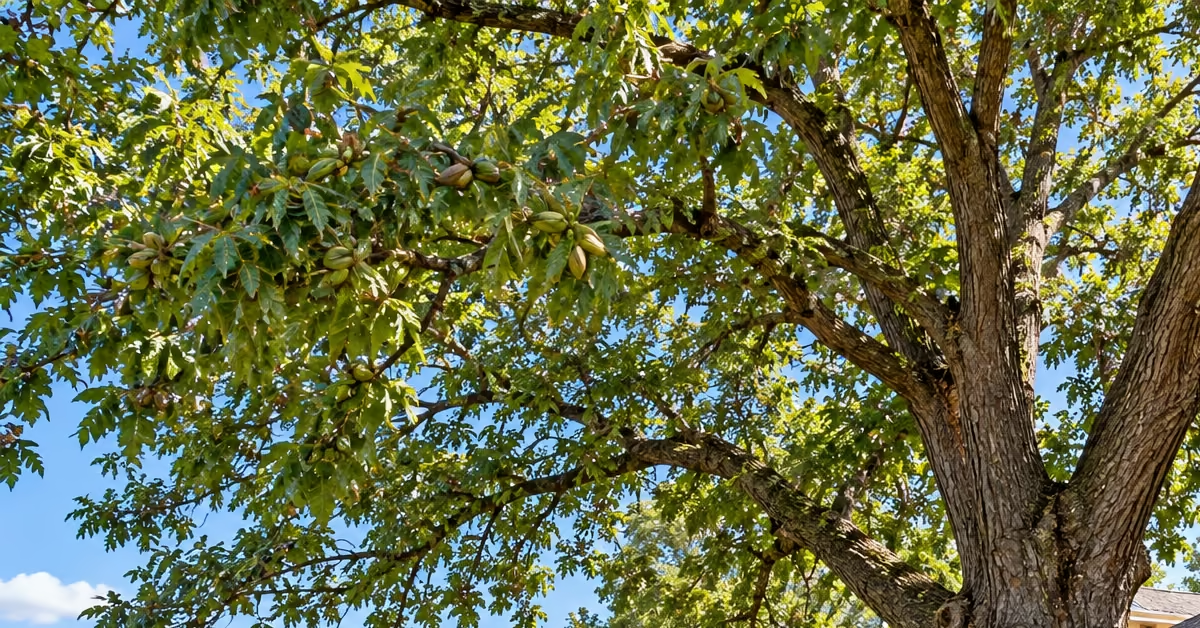
Caring for pecan trees on Lake Eufaula properties starts with protecting the roots, watching soil moisture, and pruning for sound structure rather than appearance alone. Mature pecans need room, sunlight, and consistent access to water, but being close to the lake does not guarantee that their roots have enough moisture. Soil type, drainage, rainfall, competing grass, and changes around the tree all affect water availability.
Property owners can check mulch depth, keep equipment away from the trunk, and watch for canopy changes. Large cuts, storm damage, suspected decay, and decline deserve a closer assessment. Some pecans can recover with better care or selective pruning. Removal may be safer when the trunk, roots, or main branch structure can no longer be trusted.
Pecans are native to Oklahoma and are common as shade and landscape trees. A mature specimen may occupy a large part of a yard, with roots competing against turf and other plants for water and nutrients. Age, variety, past pruning, sunlight, soil conditions, and nearby construction all affect its needs.
The Oklahoma State University Extension guide to home-landscape pecans notes that soil nutrition and moisture are basic parts of pecan health. Changes in leaf color, shoot growth, canopy density, or nut development may be the first sign that conditions have shifted.
Many pecan problems begin below ground. Compaction restricts air and water movement, while trenching may cut roots that support the tree and absorb moisture. Parking, material storage, repeated equipment traffic, and grade changes beneath the canopy can cause damage that does not appear immediately. Plan utility trenches, driveways, and other construction around established roots before work starts.
Mulch can moderate soil temperature and reduce grass competition. Spread it over the root area where practical, but keep it away from the trunk and leave the root flare visible. A deep mound against the bark can hold moisture and hide damage.
Use a mulched buffer to keep mower decks and string trimmers from repeatedly wounding the trunk.
A pecan near Lake Eufaula may still have dry root-zone soil. Elevation, drainage, competing vegetation, and rainfall affect how much water reaches the roots. The lake is not a watering system for trees growing above or away from the water table.
During a dry period, check the soil instead of watering by habit. Moisture below the surface gives a better picture than dusty grass. Water should soak into the root zone rather than run across compacted ground or collect against the trunk.
Young trees need closer attention because their roots occupy less soil. For any tree, watering varies with size, soil, heat, rainfall, and management goals. Prolonged wilting, scorched leaf edges, or early leaf drop can indicate stress, but root damage and disease may produce similar symptoms.
Fertilizer is not a cure for every thin canopy or poor crop. Drought, saturated soil, root loss, disease, insects, or shade can cause similar symptoms. Unneeded fertilizer leaves the actual problem unaddressed.
Start with a soil test and consider leaf analysis when recommended. OSU Extension’s pecan and fruit tree fertilization guidance explains how soil pH and individual nutrients relate to testing and tree condition. Recommendations should be adjusted for the site.
Do not treat lawn fertilizer as a pecan care plan. Tree age, visible growth, test results, and management goals should guide the decision.
Mature pecans often develop long, heavy limbs. Old wounds, weak attachments, and weight at a limb’s end deserve attention above roofs, parking areas, fences, or gathering spaces. Good pruning addresses a defined need while retaining healthy canopy.
Avoid topping. Cutting major limbs to stubs creates large wounds and encourages weakly attached shoots. Excessive canopy removal reduces the leaf area the tree uses to make energy, while poor cuts can leave lasting defects.
Our tree trimming and pruning service focuses on condition and structure rather than a uniform shape. Work may include removing dead limbs, correcting clearance, or reducing weight where warranted.
Leave large limbs and branches near utility lines to professionals. Keep ladders, pole tools, and cutting equipment away from conductors.

Pecan scab is a fungal disease that affects foliage and developing nuts. It produces dark lesions and becomes more troublesome on susceptible trees during frequent rain or extended leaf wetness. Removing infected leaves and shucks may reduce carryover, though recurring problems require accurate diagnosis. OSU Extension provides details in its pecan disease prevention guide.
Pecan weevils may leave nuts with round exit holes after larvae feed inside. Insects, nutrient problems, drought, and natural crop variation can produce overlapping symptoms, so one clue is rarely enough for a diagnosis.
Property owners can document useful details before seeking help:
Do not start a chemical treatment from a photo comparison alone. Product choice and timing depend on the diagnosis, label, site, and available application equipment.
Thunderstorms, straight-line winds, heavy rain, and ice can load pecan limbs. Damage may be obvious, such as a fallen leader, or harder to see, such as a fresh crack at a branch union.
After severe weather, inspect from a safe distance. Do not walk beneath hanging limbs, approach a tree near electrical lines, or pull down suspended wood. Our emergency tree service page explains how to request help when a damaged tree creates an immediate hazard.
Some damaged pecans can be preserved through selective pruning and monitoring. Urgent hazards belong with our storm cleanup service, not routine maintenance.
A single dead twig is different from a major limb that has stopped producing leaves. Look at the pattern and rate of change. Concerns that deserve professional attention include:
Our arborist consultation service provides a closer look at condition, structure, and nearby targets. The recommendation may be pruning, root-zone changes, monitoring, or no immediate work. Age and size alone do not require removal.
A declining pecan may be preserved when the roots are stable, the trunk retains usable strength, defects are limited, and enough healthy canopy remains. Reducing compaction, preventing further root injury, correcting watering, or removing selected damaged limbs may help. Some conditions can be managed but not reversed.
Removal becomes more reasonable when extensive decay affects the trunk, roots are failing, major unions have split, or limbs repeatedly fail near people and structures. Our tree removal information explains the next step when preservation is no longer sound.
The decision must account for what a failure could strike. A defect has different consequences in an open field than beside a home or busy driveway.
Seasonal checks create a useful record of changes instead of relying on memory after a storm.
Pecan trees around Eufaula, Checotah, Carlton Landing, and nearby parts of McIntosh and Pittsburg counties grow on residential lots and rural acreage. The right plan comes from the tree’s condition and site, not its distance from the shoreline. Our Lake Eufaula service-area page describes the work we handle locally.
If a pecan has heavy deadwood, storm damage, a weak union, root disturbance, or unexplained decline, our team can assess it and give you a direct recommendation. Request an estimate to arrange an on-site evaluation.
What Our Clients Say

Highly recommend Checotah Tree Service! They were professional, efficient, and did an amazing job from start to finish. It's hard to find a company that takes this much pride in their work, but they definitely delivered. If you're needing tree work done, Jeff is the guy to call.
Excellent work and will be using again! They removed a large tree close to my house, ground two stumps, and cleaned everything up beautifully including blowing sawdust off my porch. They even placed the wood in the perfect spot for burning. I will definitely recommend them!
These guys were absolutely amazing. They cut down two trees that were between power lines and next to the house. They cleaned up the area and left it in better shape than when they arrived. I will recommend them to anybody who is looking for tree removal and I will definitely use them again.
Fantastic job! The crew took out a large tree located in my front yard with careful precision and did an amazing job of cleaning up. Regular updates of pics and videos throughout the process and very reasonable price.
Excellent, professional service! They did the work they quoted in a timely manner, and even cleaned up a few extra problem roots. These are my go-to guys for tree work from now on!
Jeff & his crew did an outstanding job. I had quite a challenging job & they absolutely nailed it. I have more trees to remove this fall & I can tell you they are the only company to call.
If you've got a tree concern anywhere across Eastern Oklahoma, the next step is straightforward.
Call Checotah Tree Service today at
(918) 358-0020
for your free consultation.
Checotah Tree Service • Checotah, OK • (918) 358-0020 • 24/7 Emergency Service

From the first phone call to the final cleanup, here's how a Checotah Tree Service project actually runs.
Call (918) 358-0020 or contact us online. For emergencies, we dispatch a crew immediately. For routine work, we schedule a free on-site consultation at a time that works for you. Phone and virtual consultations are also available at no charge.
We come out to the property, walk it with you, evaluate the trees and the access, identify any safety concerns, and ask about anything we need to know before quoting. This is the conversation where you tell us what you've noticed, and we tell you what we see - including honest recommendations on what work is needed and what isn't.
Detailed written estimate covering scope, timeline, and total price, locked in by our No-Surprise Guarantee. Take your time deciding - there's no pressure to sign on the spot, and the quote is good whether you book now or in a couple of weeks.
Crew arrives on time, walks the plan with you, executes the work safely and efficiently, and completes a full cleanup before leaving. A final walkthrough confirms you're satisfied with the result.
Fill out the form below, and we'll get back to you.