106715 Belle Dr, Checotah, OK 74426, United States
Open 24/7
106715 Belle Dr, Checotah, OK 74426, United States

- Services
- About Us
- Service Area
- Gallery
- Testimonials
- Blog
- Contact Us
CLICK TO CALL US NOW (918) 358-0020
October 9, 2026
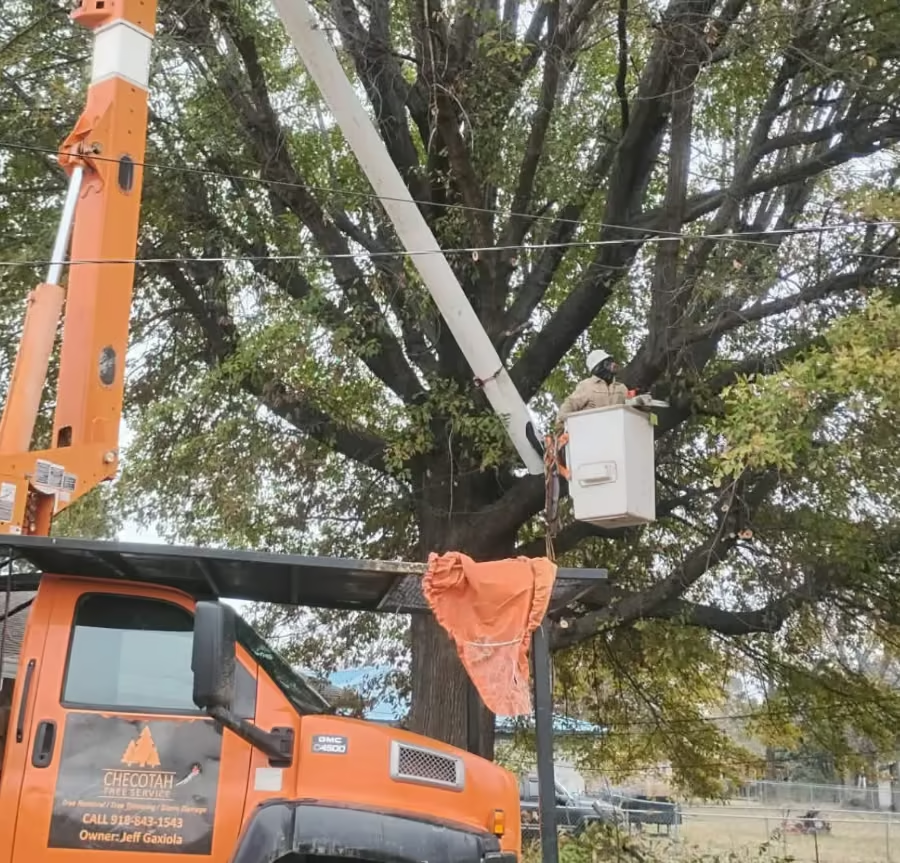
Crane-assisted tree removal may be appropriate when a tree cannot be felled or dismantled safely within the space available. Common examples include a tree hanging over a house, a storm-damaged tree resting on a structure, an unstable trunk that may be unsafe to climb, or a large tree with no suitable drop or lowering zone. A crane can lift secured sections away from roofs, fences, driveways, pools, septic areas, and valuable landscaping.
That does not mean every large, dead, or hazardous tree needs a crane. The right method depends on the tree’s condition, access, setup space, reach, ground stability, utility lines, nearby targets, and the other removal methods available. Our team makes that decision after inspecting the whole work area, not from tree size alone.
Tree removal is not a one-method job. On our tree removal service page, we describe the main approaches we consider for each property:
The crane is one tool in the plan. In some yards, conventional sectional or rigged removal offers enough control. In others, a crane provides a practical way to handle sections that cannot be lowered through the available space without creating unnecessary exposure for workers or property.
A mature tree may spread across a house, garage, business, driveway, fence, pool, septic area, or established planting bed. Even when the trunk looks sound, the branches and trunk sections may not have a clear path to the ground. A crane may allow those secured sections to be lifted toward a designated processing area instead.
This is often a property-protection decision as much as a tree decision. It can reduce the amount of material moving through a tight yard and limit reliance on narrow lowering paths. It does not promise a zero-impact job. Equipment access, foot traffic, debris handling, and the condition of the site still matter, so those details belong in the assessment.
Decay, cracks, split unions, trunk cavities, root failure, and storm damage can change what the tree can support. A tree that looks upright from the driveway may have lost strength at its base or in a major union. If the structure cannot be trusted, putting a climber into it or loading it through conventional rigging may be unsuitable.
Crane assistance can sometimes limit reliance on compromised wood, but it does not make unstable wood predictable. Our arborist consultation service is the appropriate starting point when a tree’s condition is uncertain and the work is not an immediate emergency.
No homeowner should walk beneath a cracked, hanging, or partially fallen tree to get a closer look. Keep people and pets outside the affected area until a qualified professional can assess it.
Severe thunderstorms, straight-line winds, tornado activity, lightning, heavy rain, and winter ice can leave trees uprooted, twisted, suspended, or resting on buildings in Muskogee. Our guide to emergency tree help in Muskogee explains the first steps to take after a damaging event.
Partially fallen wood may be under compression or tension, and its weight can shift without warning. Do not cut it or pull it with a vehicle or tractor. A crane may be useful when a tree is on a structure or large sections remain suspended, but the scene must be inspected first.
Our storm cleanup service addresses tree debris and damaged trees after severe weather. If a tree is actively threatening a building, blocking essential access, or creating another urgent hazard, contact our emergency tree service.
.jpg#/media/File:Fomes_fomentarius_(Zunderschwamm).jpg)
A crane needs a suitable place to enter, set up, and work. Gates, narrow drives, tight turns, overhead lines, septic systems, buried utilities, retaining walls, and landscaping can restrict access before reach is considered.
Ground conditions are just as important. Soft, saturated, sloped, filled, or unstable soil may be unable to support the equipment. OSHA requires crane ground conditions to be firm, drained, and graded enough, with supporting materials when necessary, to meet equipment requirements.
Outriggers are supports that extend from a crane to help stabilize it. They need suitable clearance and bearing area, which may conflict with fences, buildings, underground systems, or traffic lanes. Weather, excessive reach, and proximity to power lines can also rule out a setup.
Sometimes the conclusion is simple: there is a clear drop zone, the tree can be handled safely by another method, and a crane adds no useful advantage. We do not recommend crane assistance merely because the equipment is available.
Photos can help us understand the initial concern, but they do not replace an on-site assessment for complex work. Before recommending crane-assisted removal, we consider:
That review connects the method to the actual site and identifies any property preparations needed before work begins.
The exact plan changes from one tree to the next, but homeowners can expect a high-level sequence like this:
Crane operation, rigging, cutting, and load decisions belong to trained professionals. Bystanders must not enter the work zone or stand beneath suspended material. OSHA rules restrict access to fall zones and prohibit employees from standing directly under suspended loads.
For a standing tree with a developing defect, planned removal allows time to compare methods, evaluate access, coordinate schedules, and prepare the property. Early assessment may also prevent a declining tree from becoming a more complicated storm response.
Emergency work starts with immediate hazards such as damaged utilities, an occupied building, a blocked road, or unstable material. Tree removal may have to wait for firefighters, police, utility crews, or other authorities to address hazards within their control.
If a tree touches or is near an electrical line, stay away and contact the utility provider. Treat every downed line as energized. PSO advises the public to keep clear of fallen wires and contact 911 and the local power company. Call 911 first when there is an immediate threat to life, a fire, or a public emergency.
We cannot determine cost from the word “crane” or from tree height alone. Pricing depends on access, setup, tree condition, reach, nearby structures and utilities, traffic needs, debris handling, cleanup, time, and equipment.
A crane can add equipment and coordination costs. In the right setting, it may also reduce labor, complex rigging, or exposure to nearby property. Those possible efficiencies are site-specific, not guaranteed. An on-site assessment is the sound way to compare the available plans.
Homes, businesses, parking areas, and rural properties across Muskogee County present different constraints. Mature trees may stand close to older structures and utility routes, while open-looking parcels can conceal soft ground, septic components, or difficult access. Our Muskogee tree service page outlines the local services we provide.
If you are concerned about a large, leaning, decayed, or storm-damaged tree, keep the area clear and let us inspect it. We will determine whether straight felling, sectional dismantling, rigged removal, or crane assistance fits the tree and the property. You can request an estimate to schedule an assessment with Checotah Tree Service.
What Our Clients Say

Highly recommend Checotah Tree Service! They were professional, efficient, and did an amazing job from start to finish. It's hard to find a company that takes this much pride in their work, but they definitely delivered. If you're needing tree work done, Jeff is the guy to call.
Excellent work and will be using again! They removed a large tree close to my house, ground two stumps, and cleaned everything up beautifully including blowing sawdust off my porch. They even placed the wood in the perfect spot for burning. I will definitely recommend them!
These guys were absolutely amazing. They cut down two trees that were between power lines and next to the house. They cleaned up the area and left it in better shape than when they arrived. I will recommend them to anybody who is looking for tree removal and I will definitely use them again.
Fantastic job! The crew took out a large tree located in my front yard with careful precision and did an amazing job of cleaning up. Regular updates of pics and videos throughout the process and very reasonable price.
Excellent, professional service! They did the work they quoted in a timely manner, and even cleaned up a few extra problem roots. These are my go-to guys for tree work from now on!
Jeff & his crew did an outstanding job. I had quite a challenging job & they absolutely nailed it. I have more trees to remove this fall & I can tell you they are the only company to call.
If you've got a tree concern anywhere across Eastern Oklahoma, the next step is straightforward.
Call Checotah Tree Service today at
(918) 358-0020
for your free consultation.
Checotah Tree Service • Checotah, OK • (918) 358-0020 • 24/7 Emergency Service

From the first phone call to the final cleanup, here's how a Checotah Tree Service project actually runs.
Call (918) 358-0020 or contact us online. For emergencies, we dispatch a crew immediately. For routine work, we schedule a free on-site consultation at a time that works for you. Phone and virtual consultations are also available at no charge.
We come out to the property, walk it with you, evaluate the trees and the access, identify any safety concerns, and ask about anything we need to know before quoting. This is the conversation where you tell us what you've noticed, and we tell you what we see - including honest recommendations on what work is needed and what isn't.
Detailed written estimate covering scope, timeline, and total price, locked in by our No-Surprise Guarantee. Take your time deciding - there's no pressure to sign on the spot, and the quote is good whether you book now or in a couple of weeks.
Crew arrives on time, walks the plan with you, executes the work safely and efficiently, and completes a full cleanup before leaving. A final walkthrough confirms you're satisfied with the result.
Fill out the form below, and we'll get back to you.