106715 Belle Dr, Checotah, OK 74426, United States
Open 24/7
106715 Belle Dr, Checotah, OK 74426, United States

- Services
- About Us
- Service Area
- Gallery
- Testimonials
- Blog
- Contact Us
CLICK TO CALL US NOW (918) 358-0020
October 9, 2026
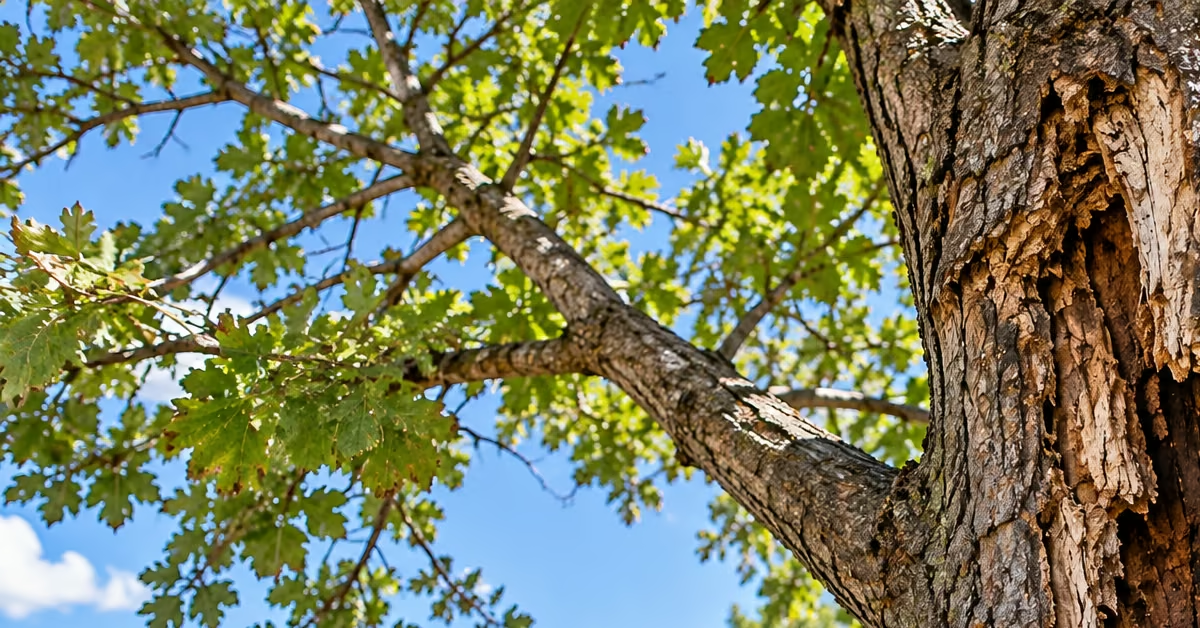
Is your dying McAlester tree worth saving? It may be, especially if the decline began recently, most of the canopy is still alive, the trunk and roots are stable, and the cause can be corrected. A tree that looks unhealthy is not always dying. Heat, drought, waterlogged soil, storm damage, root disturbance, insects, disease, and normal seasonal changes can produce similar symptoms. Removal becomes more practical when the tree has extensive decay, failing roots, an active trunk split, continuing canopy death, or another problem that cannot be corrected reasonably. Location matters too. A declining tree in an open field presents a different risk than one over a McAlester home, driveway, barn, road, or play area. A sound decision requires looking at the entire tree and its surroundings.
A stressed tree is reacting to a difficult condition and may recover when it improves. Drought, flooding, root disturbance, and partial defoliation can reduce leaf size, color, or density without killing the tree.
Decline is a longer loss of vigor. The crown may thin over several seasons, growth may slow, and dead branches may spread. Some trees respond to corrected site conditions, while others continue losing living tissue.
The terms are easier to separate this way:
Health and structural safety are different. Green leaves do not rule out a serious crack or internal decay. A drought-thinned tree may look worse while remaining stable enough to recover.
The pattern and timing of symptoms can tell you more than one brown branch. View the crown from a safe distance and compare it with older photographs. Note if the change appeared suddenly or developed over years.
Homeowners can safely record:
Do not climb, pull branches, drill into the trunk, probe cavities, or dig around major roots. These actions can cause injury without providing a dependable diagnosis.
Decline around McAlester may have several causes. Heat and dry periods can reduce water uptake and scorch foliage. Wet soil can limit oxygen around roots. Wind, ice, lightning, and construction may damage the crown, trunk, or roots.
Oklahoma State University Extension lists small leaves, early fall color, premature leaf drop, and progressive dieback among symptoms of site disturbance and tree decline. Grade changes, excavation, and compaction may affect shallow roots and produce delayed symptoms.
Pests and disease can add to the problem, but symptoms overlap. Oklahoma State University associates Hypoxylon canker on oaks with drought, heat, wounds, or chemical injury. Pine wilt can cause rapid decline in susceptible Oklahoma pines. Browning alone does not identify either problem.
Improper pruning and topping can create wounds or weak shoots. If damaged branches are involved, our tree trimming and pruning service may be relevant after an assessment.
Preservation is more reasonable when the problem is recent, limited, and correctable. The tree also needs enough sound structure and living canopy to respond.
Factors that may favor saving and monitoring the tree include:
Corrective care cannot guarantee recovery. It may include protecting the root zone, addressing irrigation or drainage, pruning damaged wood, or monitoring another growing season.

Removal becomes more reasonable when several systems are failing or one severe defect creates an unacceptable consequence. Location and extent matter more than appearance alone.
Conditions that may support removal include:
A small-limb cavity differs from decay at the trunk base. Consequences also change with location. Our tree removal service describes the next step when preservation is unrealistic, but age, size, or species alone should not decide removal.
Leaves show that parts of a tree are functioning, but they do not confirm sound support. A cracked union, decayed trunk, or damaged root system may weaken beneath a green crown. After drought, a sparse crown may still have a stable trunk and root plate.
Roots deserve attention after construction. Oklahoma State University explains that many absorbing roots are shallow and extend beyond the canopy. Root injury can reduce growth and increase dieback, while overwatering may damage fine root hairs.
Risk also depends on what the tree could strike. An isolated tree on rural acreage may allow more observation than a similar tree beside a McAlester home or busy driveway. The International Society of Arboriculture’s tree-risk checklist includes hanging branches, cracks, cavities, fungal growth, root movement, site changes, and deadwood.
An assessment considers the whole tree. Species, seasonal behavior, canopy dieback, trunk condition, branch unions, root flare, drainage, storms, site changes, and pest or disease indicators all influence the recommendation.
Timing matters. A leafless deciduous tree in winter is normal, while missing leaves during the growing season needs explanation. Progressive dieback paired with decay or root instability changes the outlook.
The recommendation may involve:
Our arborist consultation service explains the on-site review. We give property owners a clear account of the problem and available options, including no work when appropriate.
Keep people, pets, and vehicles away from a hanging limb, opening trunk split, moving root plate, or tree that shifted after a storm. Do not stand beneath it or cut a loaded branch.
If a tree touches an electrical line, stay away and contact the utility or emergency services. Do not approach or move it. Our emergency tree service covers urgent tree situations after the proper authority addresses electrical hazards.
For non-emergency decline, our team can evaluate corrective care, pruning, monitoring, removal, or replacement. McAlester and Pittsburg County property owners can review our McAlester tree service coverage or request an estimate for an on-site assessment. We will explain the realistic options without assuming removal.
What Our Clients Say

Highly recommend Checotah Tree Service! They were professional, efficient, and did an amazing job from start to finish. It's hard to find a company that takes this much pride in their work, but they definitely delivered. If you're needing tree work done, Jeff is the guy to call.
Excellent work and will be using again! They removed a large tree close to my house, ground two stumps, and cleaned everything up beautifully including blowing sawdust off my porch. They even placed the wood in the perfect spot for burning. I will definitely recommend them!
These guys were absolutely amazing. They cut down two trees that were between power lines and next to the house. They cleaned up the area and left it in better shape than when they arrived. I will recommend them to anybody who is looking for tree removal and I will definitely use them again.
Fantastic job! The crew took out a large tree located in my front yard with careful precision and did an amazing job of cleaning up. Regular updates of pics and videos throughout the process and very reasonable price.
Excellent, professional service! They did the work they quoted in a timely manner, and even cleaned up a few extra problem roots. These are my go-to guys for tree work from now on!
Jeff & his crew did an outstanding job. I had quite a challenging job & they absolutely nailed it. I have more trees to remove this fall & I can tell you they are the only company to call.
If you've got a tree concern anywhere across Eastern Oklahoma, the next step is straightforward.
Call Checotah Tree Service today at
(918) 358-0020
for your free consultation.
Checotah Tree Service • Checotah, OK • (918) 358-0020 • 24/7 Emergency Service

From the first phone call to the final cleanup, here's how a Checotah Tree Service project actually runs.
Call (918) 358-0020 or contact us online. For emergencies, we dispatch a crew immediately. For routine work, we schedule a free on-site consultation at a time that works for you. Phone and virtual consultations are also available at no charge.
We come out to the property, walk it with you, evaluate the trees and the access, identify any safety concerns, and ask about anything we need to know before quoting. This is the conversation where you tell us what you've noticed, and we tell you what we see - including honest recommendations on what work is needed and what isn't.
Detailed written estimate covering scope, timeline, and total price, locked in by our No-Surprise Guarantee. Take your time deciding - there's no pressure to sign on the spot, and the quote is good whether you book now or in a couple of weeks.
Crew arrives on time, walks the plan with you, executes the work safely and efficiently, and completes a full cleanup before leaving. A final walkthrough confirms you're satisfied with the result.
Fill out the form below, and we'll get back to you.